
This post was originally published on this site
Oura Rings and Apple Watches are tracking our sleep and exercise more than ever, and we’re just starting to figure out the consequences.
The Oura Ring 4, a popular wearable device that can track sleep, steps and recovery. Source: Oura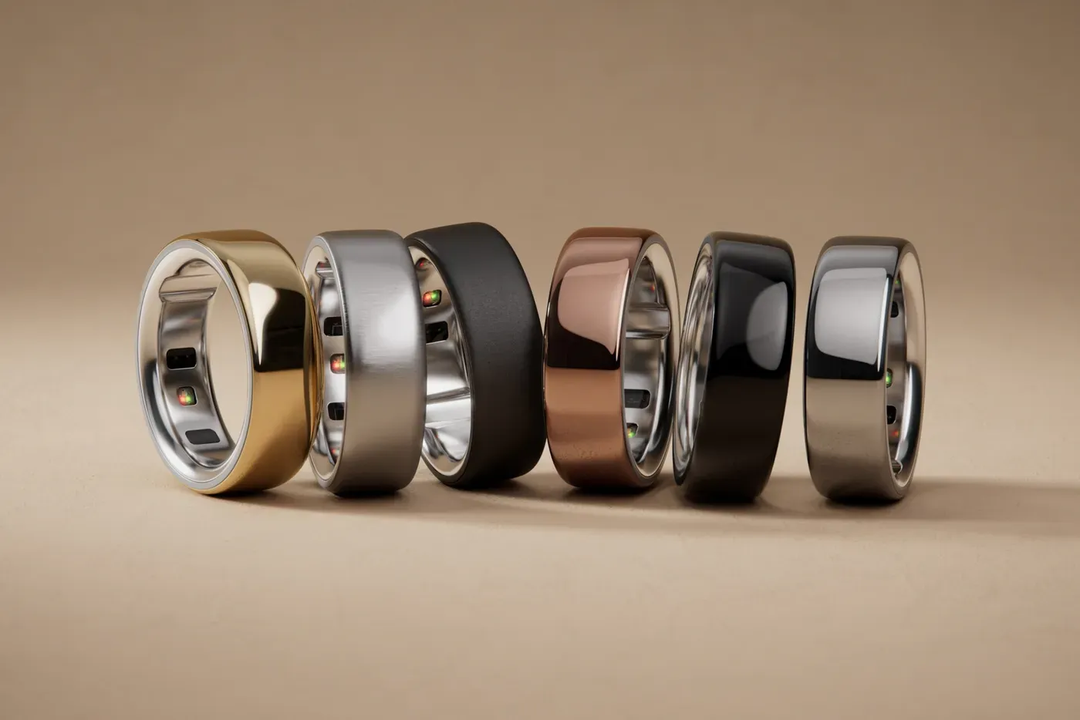
Takeaways
by Bloomberg AI
- The author and her husband compare their sleep scores from their wearable devices every morning, with the author using an Oura Ring 4 and her husband using a Samsung watch.
- Health-tracking devices have become popular, with almost half of US households owning a wearable device, and the wearables industry includes products such as the Apple Watch, Garmin devices, and Fitbits.
- Experts say that while wearables can provide useful health information, data overload and hyperfixation on health metrics can have negative effects, such as increased stress and anxiety, and recommend taking a step back from the devices if they become overwhelming.
It’s become a competition.
Every morning my husband and I wake up and compare our sleep scores: his from a Samsung watch and mine from an Oura Ring 4. We either congratulate whichever one of us performed “best” that night, or we curse our choice to stay up late binge-watching Netflix.
I’d asked for an Oura for my 36th birthday in October. I was starting to worry more about my health and thought a wearable device would motivate me to get more exercise and sleep after a decade starting work at 4 a.m. in a high-stress TV newsroom.
To me the ring is motivational, largely because I have that millennial personality trait of needing to get all A’s on my report card. I’ve found myself going on walks at lunchtime to get an activity score in the 90s—the Oura gives scores out of 100—and swapping Champagne for seltzer at parties because I realized alcohol tanked my sleep stats. (Except for a notable exception on New Year’s Eve, which made my ring and those of many Reddit users upset with them on New Year’s Day).
Mental-health experts say too much health data can cause unnecessary anxiety.Illustration: Merijn Hos for Bloomberg
I’m far from alone in obsessing over these metrics. Health‑tracking devices have been taking over our fingers and wrists, offering information on everything from steps to sleep to hormonal health to heart-rate variability, a marker of fitness and stress resilience.
A 2024 survey from Parks Associates showed that almost half of US households owned a wearable device. Oura Health Oy, the Finnish manufacturer of my ring, closed in on a roughly $11 billion valuation in September and has sold more than 5.5 million rings.
The wearables industry includes dominant products such as the Apple Watch, which premiered in 2015 and has single-handedly outsold the entire Swiss watch industry by volume each year since 2019. (Apple Inc. doesn’t share how many watches it’s sold, but market researcher IDC estimated that by the end of 2025, the number will have reached more than 321 million.)
There are Garmin devices and Fitbits. Whoop bands were even used in a partnership at the Ryder Cup in September, which telecast the live heart rate of each golfer, including Justin Thomas, who had a rate of 130 beats per minute during one pressure putt. (That’s normal during exercise but elevated otherwise.)
One more thing to worry about
Can wearables really help us live a longer, healthier life? Experts say that in the right hands, information gathered on these devices—such as heart-rate monitoring—can be lifesaving, especially in detecting irregular rhythms that need medical attention. And taking a more proactive approach to your own health is often a good thing.
But doctors worry that data overload and hyperfixation on a litany of health metrics can have the opposite effect, causing a host of new stressors to raise your blood pressure and affect your sleep.
Thea Gallagher, a clinical psychologist at New York University Langone Health, is seeing this reaction in her patients, many of whom have high-flying careers.
“We need to monitor this tech so that it doesn’t take over our lives,” she says. “I had one patient with health anxiety, and she couldn’t stop obsessing about her heart-rate variability. I told her to step away from her smart device.”
Gallagher compares these devices to a scale. Some people have no issue weighing themselves. Others hyperfocus on their weight in an unhealthy way. She recommends seeing a doctor if you have questions, instead of going down a Google rabbit hole. Good advice, if I say so myself.
Author and tech journalist Becca Caddy has been testing wearables for more than 10 years. When she’s not reviewing the devices, she finds them challenging. They tend to boost her anxiety, which she thinks might be tied to her history of eating disorders.
“I just don’t think it ultimately helps,” says Caddy, who lives in Leeds, England. “I love fitness, and I find not tracking my workouts has brought so much enjoyment back. I just don’t think the average person needs all this data all the time.”
Of course, it’s different for everyone. These devices have earned rave reviews over the years, and Oura in particular has famous fans such as Jennifer Aniston and Gwyneth Paltrow
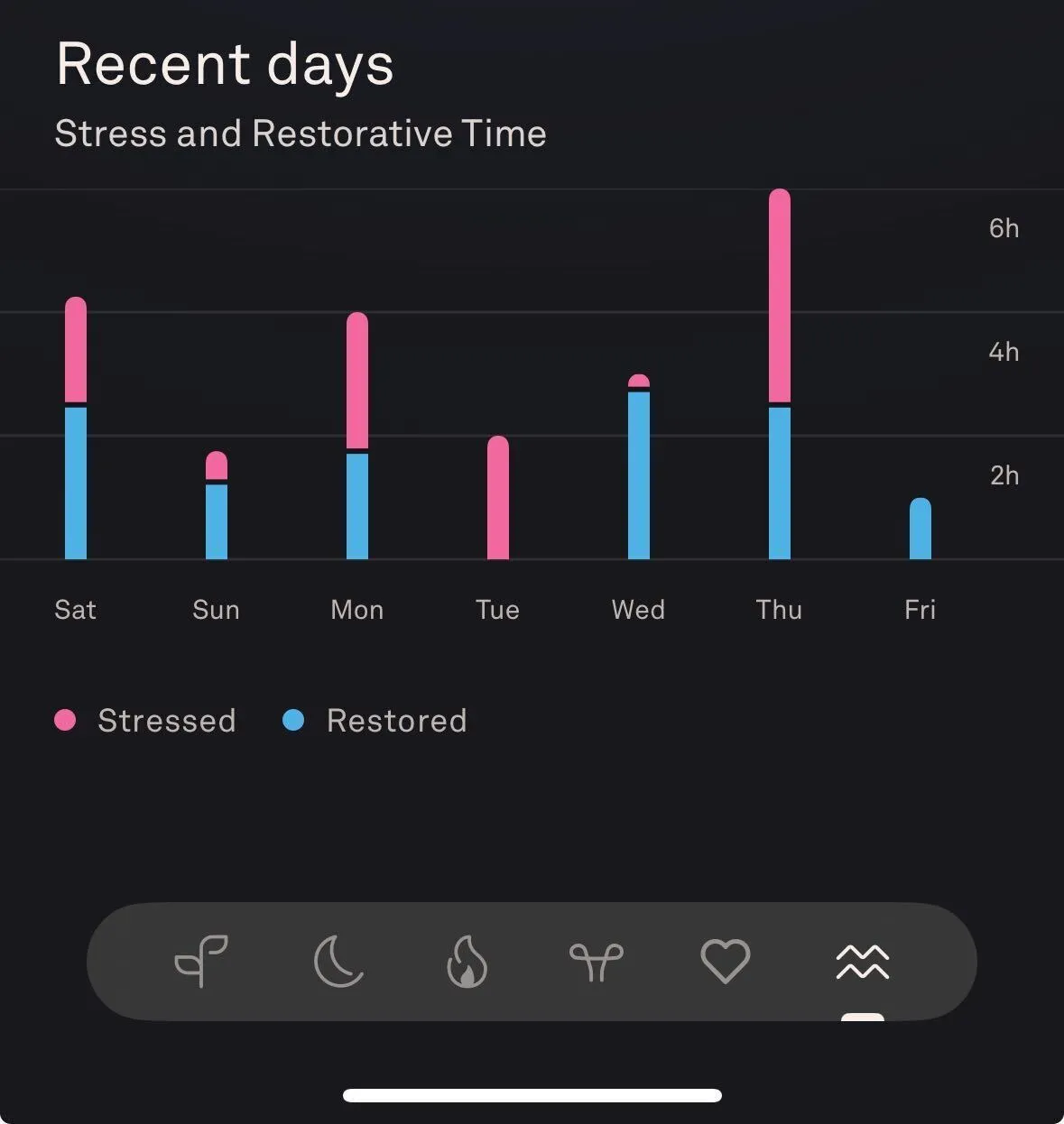
As a new Oura user, I’ve found it fascinating to spot changes in my heart rate. It spikes when I’m annoyed on my commute on London’s Underground. After a stressful meeting in the office, I’ll open my app and see my heart rate rise. It’s at 72 beats per minute as I type this, which falls into the normal range of 60 to 100 for healthy adults at rest.
In 2018, Gregory Marcus, associate chief of cardiology for research at UCSF Health, co-authored one of the first studies demonstrating that an Apple Watch could detect an irregular heart rhythm, or atrial fibrillation. (Apple didn’t fund the research.) He says many tech giants have algorithms to interpret electrocardiograms that “generally seem to be very accurate if your heart rhythm is normal.”
“The readings off these wearables can be really useful,” Marcus says. But, he warns, there’s a real risk of false positives for A-fib. “It can create a lot of anxiety and testing that would not have come about otherwise.”
The San Francisco-based doctor says his patients often fret when they notice their heart rate goes very low when they sleep, a totally normal occurrence. His simple solution: Don’t wear your watch when you sleep.
You have a choice
Tech executives maintain that these wearable devices were designed not to stress people out. “The ring is intentionally quiet—no lights, sounds or haptics—and the app focuses on clear, trend-based guidance rather than real-time alerts or judgment,” says Holly Shelton, chief product officer at Oura. “And if engaging with your data ever feels like too much, it’s completely healthy to take a step back. Oura will be here when you’re ready.”
It can be hard to turn away from these wearables, though, given the cost. If you invest in a $349 device with a $5.99 monthly subscription such as the Oura, you want value for your money.
I started to find that my wearable device inspires me to be more active when I’m rested and healthy, but it makes me feel worse if I’m not.
On a recent transatlantic flight, my device clocked my mere two hours and 32 minutes of sleep on a red-eye as a nap. The app gave me a “failing” sleep score of 32. I watched my heart rate spike as I stressed over my poor sleep—and then over my higher heart rate. I was worrying myself into what Gallagher calls a doom loop. I didn’t need my ring to know that I wasn’t feeling my best.
Now, I give myself a break from the real-time deluge of negative data and put my Oura on my bedside table when I’m not feeling well. I slide it back on when my body, not my stats, tells me I’m back to normal.
© 2025 Bloomberg L.P.