
This post was originally published on this site
Key Takeaways
- Job openings rose to a two-year high in May, while consumer confidence in the job market sank to its lowest level since the pandemic.
- Hiring remains low despite the uptick in job openings.
- The two reports showed a continuing trend: hard data indicate the economy is on a solid footing, while the public remains deeply pessimistic.
Job openings ticked up to a two-year high in May, while consumer confidence in finding jobs sank to its lowest level since the pandemic, according to two separate reports Tuesday.
The encouraging news about the job market came from the Bureau of Labor Statistics, which reported U.S. employers had 7.6 million job openings in May, slightly higher than in April and the most since May 2024. For the second month in a row, there was more than one job available for every unemployed person, indicating the job market was roughly in balance between employers and job seekers.
However, a separate report on consumer confidence from The Conference Board research group showed that while overall consumer confidence inched up in June amid falling gas prices, 22.5% of U.S. adults surveyed said jobs were hard to get, the highest percentage since January 2021.
Hard data indicate the economy is on a solid footing, while the public remains deeply pessimistic. Scott Olson / Getty Images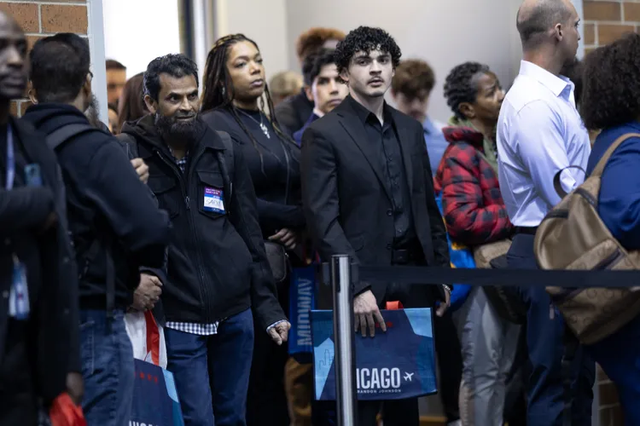
What This Means For The Economy
The improvement in job openings suggests the job market is in better shape than it was in 2025, but remains in a low-hire, low-fire limbo.
The bureau’s report provided some statistical basis for the perception that it’s hard to get hired, no matter how many job openings there may be. Employers hired 5.2 million people in May, relatively low by historic standards, and the fewest since December.
“While other labor market conditions have improved, the hiring rate remains depressed, which has caused consumers’ perception of job availability to deteriorate,” Gwen Zemmer, an economist at Oxford Economics, wrote in a commentary. “Although we don’t anticipate a strong rebound in hiring this year, slower labor-force growth due to reduced immigration and an aging population will keep the unemployment rate in check.”
The contrasting views of the labor market were a continuation of the recent tendency of hard data to show major economic indicators on a relatively solid footing by historic standards. Meanwhile, public opinion shows deep pessimism about inflation, the job market, and personal finances.
The job market has rebounded significantly since 2025, when tariffs pushed job creation down to its lowest level outside of a recession since 2003. The recovery has yet to register with job-seekers.
“The ‘hiring recession’ of 2025 may be over, but it will take more months of strong hiring to see confidence rebound more,” Heather Long, chief economist at Navy Federal Credit Union, wrote in a commentary.
This Investopedia article was legally licensed by AdvisorStream.