
This post was originally published on this site
Key Takeaways
- A single retiree with a paid-off home may need about $572,000 to $909,000 in savings, depending on the state.
- A typical mortgage-free couple could need $700,000 to $1.18 million for a comfortable retirement.
- Even without a mortgage, retirees still face housing costs such as property taxes, insurance, utilities, and fees.
Credit: Investopedia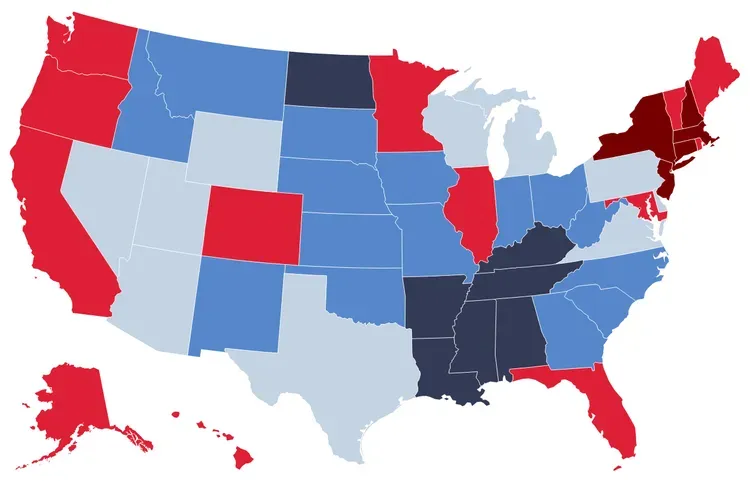
Paying off your mortgage before you retire can feel like clearing one of the biggest hurdles keeping you from financial freedom. Take away that monthly payment, and you may need far less of a nest egg.
But that doesn’t mean you won’t have housing bills—insurance, utilities, property taxes, maintenance, and other living expenses don’t disappear. These expenses vary by address, which is why an Investopedia analysis of federal data finds that geography makes a big difference in how much you need to retire comfortably.
How Much Mortgage-Free Retirees Need to Save
Almost 80% of U.S. households headed by someone 65 or older own their home, and of those, close to two-thirds own it free and clear.
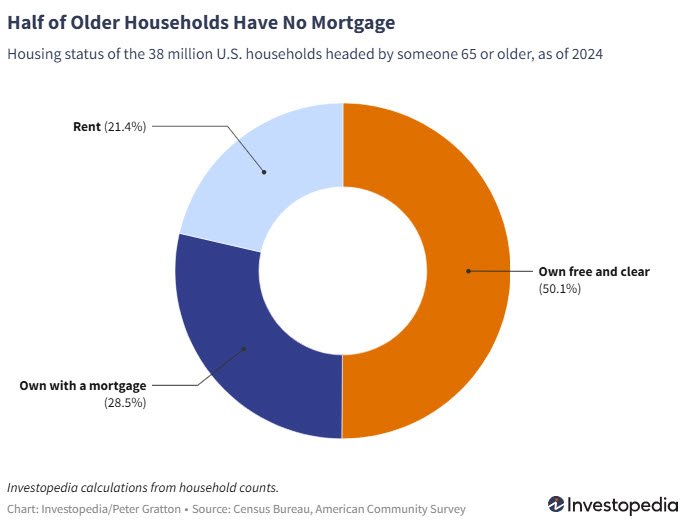
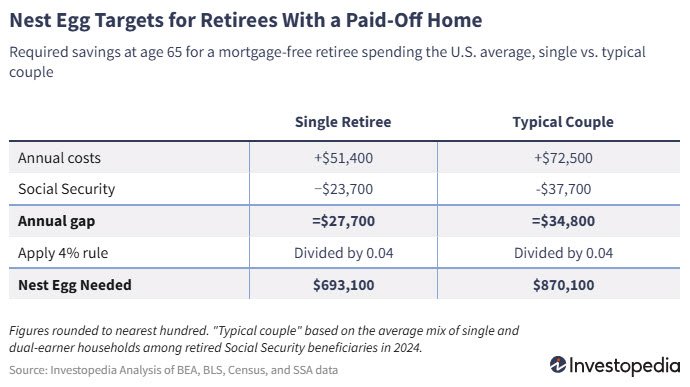
A single retiree with a paid-off home needs about $693,000 in savings to retire comfortably, according to Investopedia’s analysis. Depending on the state, that figure ranges from about $572,000 to $909,000.
Meanwhile, a typical mortgage-free couple needs about $870,000 in savings for a comfortable retirement. Depending on where they choose to live, the estimate ranges from about $700,000 to $1.18 million.
Those mortgage-free estimates are well below the $1.46 million Americans told Northwestern Mutual this year they’d need to retire comfortably.1 One big reason: Retirees free of a mortgage payment have a significant cost advantage, with median monthly housing costs of $658, versus $1,736 for owners still paying off a mortgage, according to Census data.2
Why This Matters to You
Retirement savings targets that are one-size-fits-all can miss how much a change in housing costs shifts the math. Where you live and whether you’ve paid off your mortgage can mean needing to save far less to retire comfortably.
The States Where a Paid-Off Home Stretches Retirement Savings Furthest
Investopedia’s model estimates the cost of a comfortable year of retirement in each state, including everyday spending and the housing costs homeowners still face after the mortgage is gone.
It then accounts for the national average annual Social Security benefit—$23,704 for singles and $37,713 for couples—with savings covering the remaining gap. Using the 4% rule of thumb for retirement withdrawals, the annual shortfall is divided by 0.04 (or multiplied by 25) to estimate the nest egg required.
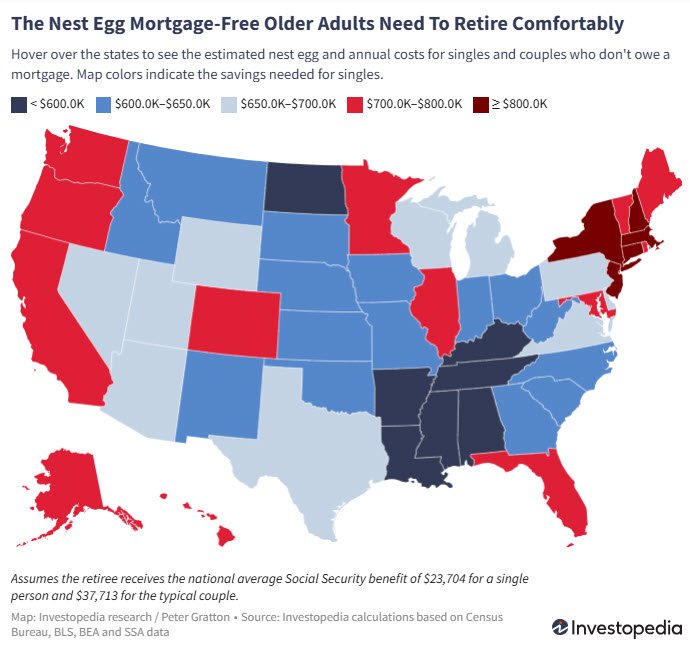
Arkansas requires the least savings for a mortgage-free single retiree, at about $572,000. Louisiana, North Dakota, Mississippi, and Tennessee follow, all with estimates below $590,000—and more than $100,000 below the national figure of about $693,000.
Of course, couples generally need larger nest eggs, though the cost-of-living geography is similar. For a couple, the estimated amount for a comfortable retirement ranges from about $700,000 to $1.18 million, depending on the state.
The Costs That Outlive Your Mortgage
Older homeowners without a mortgage still have housing bills to pay, including property taxes, insurance, utilities, and fees. Those costs range from about $398 a month in West Virginia to just over $1,200 in New Jersey, according to Census Bureau data.2
Those ongoing costs help explain why mortgage-free retirement is still far more expensive in some states than others. The Northeast dominates the high end: New Jersey has the highest estimated nest egg for a single retiree with a paid-off home, at about $909,000, followed by New York ($840,000), Washington, D.C. ($834,000), Massachusetts ($826,000), Connecticut ($819,000), and New Hampshire ($814,000).
But retiring mortgage-free is becoming less common. In 1980, just 13% of homeowners ages 65 and over still had a mortgage, according to Census data.3 By 2024, that share had risen to 36%.2
According to the Federal Reserve, the mortgage balances among those ages 65 to 79 are bigger, too: median mortgage debt among older owners more than quintupled in inflation-adjusted terms, from $21,000 in 1989 to $110,000 in 2022.
How We Calculated Retirement Costs and Savings Needs
The estimates in this analysis use Investopedia’s methodology for calculating a comfortable retirement, combining state-level living costs, the national average for Social Security income, and the 4% withdrawal rule to estimate how much retirees need in savings.
Housing costs reflect what homeowners ages 65 and over without a mortgage pay in each state, including property taxes, insurance, utilities, and fees. That differs from our baseline model, which uses a blend of housing costs for owners and renters.
Finally, the nest egg estimates are based on financial assets and do not include the value of a retiree’s home.
For more detail on the assumptions behind these calculations, see our national analyses of retirement costs for couples and single retirees.
Article Sources
Investopedia requires writers to use primary sources to support their work. These include white papers, government data, original reporting, and interviews with industry experts. We also reference original research from other reputable publishers where appropriate. You can learn more about the standards we follow in producing accurate, unbiased content in our editorial policy.
- Northwestern Mutual. “Americans Believe They Will Need $1.46 Million to Retire Comfortably, Up More Than 15% Since Last Year, According to Northwestern Mutual 2026 Planning & Progress Study.”
- U.S. Census Bureau. “S0103.”
- Collins, J. Michael, Erik Hembre, and Carly Urban. “Exploring the Rise of Mortgage Borrowing Among Older Americans.” Regional Science and Urban Economics (July 2020).
This Investopedia article was legally licensed by AdvisorStream.